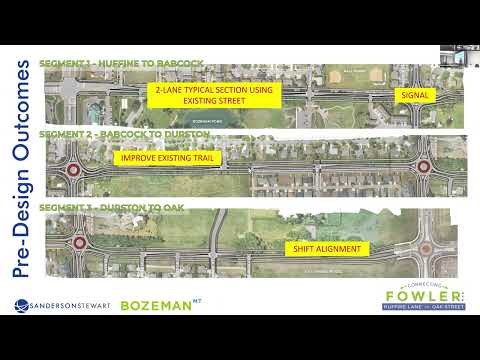
Fowler Avenue Connection
About the Fowler Avenue Connection Project
The Fowler Avenue Connection Project will connect Fowler Avenue from Oak Street to Huffine Lane, creating a key north-south corridor between 19th Avenue and Ferguson Avenue. This project is currently in the design phase, and we appreciate the continued interest and feedback from community members who’ve been following along.
The design phase began after extensive community engagement, traffic and environmental analyses, and direction from the City Commission. A 30% design was shared with the public in May 2024, and following additional feedback and refinement, the 60% design is now complete. The final 90% design is expected in January 2026.
Ask Questions, Stay Involved
Thank you to everyone who came out to our July 9 Walking Tour, we greatly appreciate the conversations and commitment our community has towards enhancing this area of our city. Couldn't attend the in-person event(s) or simply have questions about the project? We’ve set up an online Q&A forum where you can post your questions and see responses from the project team. Visit the Q&A Session tab below to participate.
Be sure to register on this site to receive email updates, stay informed about the final design phase, and learn about future opportunities to share your input.
Project Timeline & Background
Fall 2021 – Project kickoff and start of the pre-design phase
August 2022 – Final Pre-Design Report completed and presented to City leadership
May 2024 – 30% design shared with the community
June 2025 – 60% design completed and prepared for community review
January 2026 – Target completion of 90% (final) design
During the pre-design phase, the project team studied existing site conditions, conducted traffic and environmental analyses, and gathered community input on key design elements. This feedback has directly shaped the project’s evolution into its current design.
Thank you for staying engaged. We're glad you're here and look forward to continuing the conversation!
Aerial view of the Fowler Avenue Corridor highlighting key focus areas identified in the 60% design plans, including intersections, pedestrian improvements, and connection points from Oak Street to Huffine Lane. About the Fowler Avenue Connection Project
The Fowler Avenue Connection Project will connect Fowler Avenue from Oak Street to Huffine Lane, creating a key north-south corridor between 19th Avenue and Ferguson Avenue. This project is currently in the design phase, and we appreciate the continued interest and feedback from community members who’ve been following along.
The design phase began after extensive community engagement, traffic and environmental analyses, and direction from the City Commission. A 30% design was shared with the public in May 2024, and following additional feedback and refinement, the 60% design is now complete. The final 90% design is expected in January 2026.
Ask Questions, Stay Involved
Thank you to everyone who came out to our July 9 Walking Tour, we greatly appreciate the conversations and commitment our community has towards enhancing this area of our city. Couldn't attend the in-person event(s) or simply have questions about the project? We’ve set up an online Q&A forum where you can post your questions and see responses from the project team. Visit the Q&A Session tab below to participate.
Be sure to register on this site to receive email updates, stay informed about the final design phase, and learn about future opportunities to share your input.
Project Timeline & Background
Fall 2021 – Project kickoff and start of the pre-design phase
August 2022 – Final Pre-Design Report completed and presented to City leadership
May 2024 – 30% design shared with the community
June 2025 – 60% design completed and prepared for community review
January 2026 – Target completion of 90% (final) design
During the pre-design phase, the project team studied existing site conditions, conducted traffic and environmental analyses, and gathered community input on key design elements. This feedback has directly shaped the project’s evolution into its current design.
Thank you for staying engaged. We're glad you're here and look forward to continuing the conversation!
Aerial view of the Fowler Avenue Corridor highlighting key focus areas identified in the 60% design plans, including intersections, pedestrian improvements, and connection points from Oak Street to Huffine Lane. What matters most for the future Fowler Ave?
What are the most important considerations for you as we design the Fowler Avenue Connection?
Whether you’re a neighbor, a Gallatin High student, or a commuter by bike, bus, foot, or car, we want to hear about your values, hopes, and concerns for this new transportation corridor.
Your responses here will be visible to other site visitors and help the project team prepare for further conversation with neighbors, commuters, and other community groups during the engagement process.
Thank you for sharing your thoughts with us!
-
Share Is This Project Really Needed Right Now? on Facebook Share Is This Project Really Needed Right Now? on Twitter Share Is This Project Really Needed Right Now? on Linkedin Email Is This Project Really Needed Right Now? link
Is This Project Really Needed Right Now?
by JackKost, almost 4 years ago
My name is Jack and I own a home on Sweetgrass Ave, the Fowler trail and open space is literally out my back gate.
In the Dec 12, 2021 Chronicle story: Lonsdale (city transportation engr.) said "he doesn’t know why the road wasn’t connected earlier but that it has been identified in transportation master plans over the years.”
Questionable statement – The current, 2017 Bozeman Transportation Master Plan doesn’t identify this segment of Fowler for any work, extensions, etc. It does identify some intersection improvements at Babcock St. and Durston Rd (pg. 82) as well as extending Fowler between Garfield... Continue reading
My name is Jack and I own a home on Sweetgrass Ave, the Fowler trail and open space is literally out my back gate.
In the Dec 12, 2021 Chronicle story: Lonsdale (city transportation engr.) said "he doesn’t know why the road wasn’t connected earlier but that it has been identified in transportation master plans over the years.”
Questionable statement – The current, 2017 Bozeman Transportation Master Plan doesn’t identify this segment of Fowler for any work, extensions, etc. It does identify some intersection improvements at Babcock St. and Durston Rd (pg. 82) as well as extending Fowler between Garfield St and Stucky Rd but this project isn’t mentioned anywhere in that plan. Internet maps (Bing, Google) don’t show this ever happened, be worth verifying.
Why the city is committing to build this segment now?
Assuming the need for the project has been documented, it would be helpful to see the data such as traffic counts and projections, time delays for ER services, growth projections, etc.
Does this data support the current design alternatives being proposed? Can the city provide this so stakeholder have a better understanding of what’s driving theses designs?
What technical criteria are being used to evaluate and rank the appropriateness of the design alternatives? These should be provided to community stakeholders so they can better understand the planning and engineering process.
Why do the design alternatives (2-lane, 4-lane) include center medians? According to the Transportation Plan (pg. 41) this configuration accommodates significantly more vehicle traffic (6,000-8,000 respectively) than the 12,000 vehicle capacity of a simple 2-lane design. Are these the types of traffic volumes the city is expecting for the Fowler Extension project?
How About Clearly Articulating Project-specific Goals?
In addition to the Transportation Master Plan, the open house presentation identifies using goals from the Community Plan and the Climate Action Plan as decision making criteria for the project’s planning and design. These plans comprise 408 pages not including appendices. It seems disingenuous and disrespectful to expect stakeholders to comb through the documents in hopes of finding the applicable goals for the Fowler Ave. Connection project. The city and its consultants should be providing this to information at the start of this project.
More Context-sensitive Design Options Please
The stakeholder meeting summaries posted on the project website identify common preferences for a maximum of 2 or 3 travel lanes, slow (25 mph) speed limits, multiuse trails and wide xeriscaped boulevards / buffer areas between the new street and the existing back yards. So it’s concerning to be presented with only two design options, each of which include a 12 ft. wide center landscape median. I Is there a reason why there isn’t a design option that more directly illustrates community preferences?
Most of the existing segments of Fowler Ave. are 2-lanes without center medians. Why isn’t this type of street layout included as one of the design options?
Lucky for me, I’m currently on paternity leave so I’ve been able to devote several nap times to reading through the Transportation Master Plan. This plan identifies numerous goals and policies prioritizing walking, biking and transit and project design options include new facilities for walking and biking. Given that there’s also strong community support (identified in the meeting summaries) for this aspect the project I wonder if an “active transportation only” (road-free) design alternative could be considered? Besides being a bold and innovative endeavor an active transportation only alternative would be a tangible expression of the city’s Climate Action Plan. It could also be undertaken as an initial phased, pilot project with area preserved for a future street. Then performance data could be collected and evaluated to ascertain if and what type of vehicular facility is really needed.
The land surrounding the roadway connection project is comprised of fully developed residential neighborhoods well served by existing local street network. None of these stakeholders need another street running along their backyards to conduct their daily lives. So it’s only fair that a concerted effort be made to identify the impacts of this project, whether it’s changes in property values or access to emergency service.
Also, given all of the pressing needs currently facing the city is this the right time to be making this investment? If so then more detailed information regarding the project’s purpose, need, evaluation methodology and evaluation criteria should be provided to stakeholders before charging ahead with asking peoples’ opinions of roadway design options proposals.
Proposed alternatives:
-
Share A much-needed project, planned for more than a decade on Facebook Share A much-needed project, planned for more than a decade on Twitter Share A much-needed project, planned for more than a decade on Linkedin Email A much-needed project, planned for more than a decade link
A much-needed project, planned for more than a decade
by shawnr, almost 4 years agoThis is a much-needed project, one that has been in the works for more than a decade. It will take pressure off so many residential streets in the area, such as Meagher Avenue, Hunters Way, etc. These residential streets are currently receiving an enormous amount of north-south thru-traffic, often at high speeds that are dangerous to kids and residents on these narrow residential streets. This project has been planned and known about for years. Excited to see it come to together!This is a much-needed project, one that has been in the works for more than a decade. It will take pressure off so many residential streets in the area, such as Meagher Avenue, Hunters Way, etc. These residential streets are currently receiving an enormous amount of north-south thru-traffic, often at high speeds that are dangerous to kids and residents on these narrow residential streets. This project has been planned and known about for years. Excited to see it come to together! -
Share Concerned long time resident on Facebook Share Concerned long time resident on Twitter Share Concerned long time resident on Linkedin Email Concerned long time resident link
Concerned long time resident
by Elsberry, almost 4 years agoI grew up in the this home and have lived here since 1993. My backyard faces this new street and while I understand the growth of Bozeman and the purpose of this new through street, I am deeply saddened to see this purposed as anything that will disrupt the current path and trees/eco system that is intact. Please, I ask you to consider- if this was your home that you were raised in, and if you shared in the joy that these trees bring to me and my family personality but also this community -would you see this project through... Continue reading
I grew up in the this home and have lived here since 1993. My backyard faces this new street and while I understand the growth of Bozeman and the purpose of this new through street, I am deeply saddened to see this purposed as anything that will disrupt the current path and trees/eco system that is intact. Please, I ask you to consider- if this was your home that you were raised in, and if you shared in the joy that these trees bring to me and my family personality but also this community -would you see this project through? There has been so much negative change in the world and life is challenging. This is no exception and it is personal. I kindly ask for you to consider the impact this is having in bringing this straight to our backyards literally and the destruction this will cause. PLEASE LEAVE AS MANY TREES AND SPACE YOU CAN ALONG THE WEST BIKE PATH BETWEEN THE STREET AND THE HOUSES ON Sweetgrass and Fowler! There is not a resident that is not devastated about this. I hope that when the work does begin, that the people doing this work understand and respect this and really do leave as much of a boundary as possible between the houses currently on Sweetgrass and Fowler and this new street. Consider a scenario in which the street is not widened anymore that what is currently there. We don’t need a median, we don’t need 2 bike paths or walk ways. We don’t need more negative change!!!!! Thank you for reading my plea and for your consideration, respect and grace for our neighborhood.
-
Share insufficient information to make informed choices on Facebook Share insufficient information to make informed choices on Twitter Share insufficient information to make informed choices on Linkedin Email insufficient information to make informed choices link
insufficient information to make informed choices
by Darcie Warden, almost 4 years agoMy name is Darcie. I live on Fowler Ave. Thank you for the opportunity to provide public input for this project. I think it's important for the people who are directly impacted by this project to have a voice in how it takes shape.I have gone on the website to look at all the options you have given us to vote on. After a thorough review, I have several areas of concern that I would like the decision-makers to consider before I vote.
Depiction of the neighborhood
The mock-up of the medium, street, walking path, and bike path don't... Continue reading
My name is Darcie. I live on Fowler Ave. Thank you for the opportunity to provide public input for this project. I think it's important for the people who are directly impacted by this project to have a voice in how it takes shape.I have gone on the website to look at all the options you have given us to vote on. After a thorough review, I have several areas of concern that I would like the decision-makers to consider before I vote.
Depiction of the neighborhood
The mock-up of the medium, street, walking path, and bike path don't include the houses along the street I live on. For anybody looking at these pictures, it looks like there is a huge park setting on either side of the road/paths. This isn't the case. The road looks much wider than it currently is in-front of my house and there is a medium along with either parking, walking, and bike paths. I don't understand how all of this is supposed to fit in a neighborhood that already exists. Recommendation: Go back and create the mock-up of the new road with the houses as they would look along the road so we can know what we are voting on.
Traffic, noise pollution, and air pollution
It is reasonable to assume there will be a significant increase in traffic along Fowler. Along with increased traffic comes increased noise and air pollution. This is a real concern that needs to be addressed.
Recommendations: Air pollution can be addressed with appropriate, large vegetation such as trees and bushes along the length of the street. I was told there as the idea of zero scape. This option may sound nice but it leaves the neighborhood vulnerable to excessive car exhaust exposure.
Sound pollution will increase. Slow speed along the road will mitigate the sounds and will increase safety. Again, vegetation will be important to buffer sounds and create a fresh feeling in the neighborhood.
Traffic is a concern. It is reasonable to assume there will be an increase in traffic. There are several schools located north and south of the block on Fowler between Babcock and Durston. There are children walking and crossing the roads in the morning and afternoons. Limiting the speed at which people can drive is essential for the safety of the children walking to school.
Walking paths
All of the options have walking paths on both sides of the road. The section of street between Babcock and Durston only has one walking path on the west side of the road. That is all that is needed. The extra bike and walking paths are overkill and not needed.
Traffic Lights vs Roundabout
It is hard to tell if a traffic light or a roundabout is the preferable option. The decision needs to be based on what will move traffic through most efficiently. The concern I have is traffic idling in front of my house at either a stop light or a roundabout that isn't working well.
Allowable traffic
Please don't allow semi-trucks on this road. This is a neighborhood not a thoroughfare for commercial traffic.
I will continue to engage as we move through this process. Thank you for the opportunity to provide my thoughts, feedback, and recommendations for a thoughtful project.
-
Share Evidence does not support Fowler expansion on Facebook Share Evidence does not support Fowler expansion on Twitter Share Evidence does not support Fowler expansion on Linkedin Email Evidence does not support Fowler expansion link
Evidence does not support Fowler expansion
by bornandraised, almost 4 years agoThe arguments for embarking on the “Fowler Connection” presented on February 15, 2022 to the City Commission are (1) that it has, in some capacity, been in the city’s transportation plans since at least 1990, (2) that Fowler is halfway between the principal arterials Cottonwood Rd. and North 19th Ave, (3) that traffic is diverted to other streets, and that (4) emergency response times for Fire Station 3 would be improved. These arguments are not convincing that the need for a minor arterial roadway exists.
1. A plan from or before 1990 is not necessarily relevant to Bozeman today. It’s... Continue reading
The arguments for embarking on the “Fowler Connection” presented on February 15, 2022 to the City Commission are (1) that it has, in some capacity, been in the city’s transportation plans since at least 1990, (2) that Fowler is halfway between the principal arterials Cottonwood Rd. and North 19th Ave, (3) that traffic is diverted to other streets, and that (4) emergency response times for Fire Station 3 would be improved. These arguments are not convincing that the need for a minor arterial roadway exists.
1. A plan from or before 1990 is not necessarily relevant to Bozeman today. It’s true that the older transportation plans accessible online mention this, all the way through the most recent in 2017, where it is listed as a recommended project with no plan or funding source (MSN-13). When the plan was initiated in 1990 or before, as stated in the Feb. 15 presentation, there were no residential areas on Sweetgrass or Fowler based on historic Google Earth imagery. Homes on Sweetgrass were built in the mid-1990s according to Zillow, and Fowler Place was acquired by the city in 2005 and subsequently developed). People did not already use Ferguson, which has commercial areas, deeper setbacks, and wider boulevard strips through residential blocks (the houses are not nearly as close to the street). On Fowler between Babcock and Durston, setbacks are exactly the bare minimum of 25 feet and the right of way will not allow for more space.
The decades-old plan should be reconsidered as the evidence base for decision-making today. Fowler’s designation as a minor arterial is now in discordance with federal functional classification of urban minor arterials as roads that “Provide more land access than Principal Arterials without penetrating identifiable neighborhoods.”
The reasons for this federal guideline are clear: in the past 10-15 years, scientific studies have found there is a large body of evidence that living near major roads has a deleterious impact on human health. In addition to public safety hazards surrounding busy streets, epidemiological studies published in peer-reviewed journals provide striking evidence that residing in close proximity (50 meters) to a major roadway is associated with increased risk of a variety of health outcomes, including:
Neurological diseases, such as dementia, Alzheimer’s, Parkinson’s disease, multiple sclerosis (1);
Coronary heart disease (2,3);
Childhood leukemia (4,15), lung cancer (5,6), breast cancer (7,8,9);
Reproductive issues (early puberty (10), fertility (11), pre-term birth (12), early menopause (13)); and
Diabetes (14).
Based on the Montana Cadastral online, at least 60 residential lots just between Babcock and Durston are within 50 meters of the proposed minor arterial roadway; many more are located along other sections of the proposed expansion.
2. There is no precedent or need to space minor arterials exactly halfway between arterials. One glance at the map on page 25 of the 2017 Transportation Master Plan shows that this is not a consistent rule throughout the city and has no real basis. Ferguson, which is also between the two arterials, is already being used in this capacity.
3. Traffic does not necessarily need to be diverted to a new minor arterial. The last published scenario analysis of extending Fowler was done in 2007 and is no longer relevant. A map of daily vehicle counts for some of the more major roads was shown during the Feb. 15 presentation but did not include counts on local streets that the city is saying needs less traffic volume. These numbers of vehicles have no context to the public beyond being lower than the numbers in "Table 2.7 Theoretical Roadway Capacity" from the 2017 plan (linked above). Therefore, the only remaining published evidence base appears to be the roadway volume-to-capacity ratios published five years ago in the 2017 plan. Figure 2.9 shows that no nearby routes were at capacity in 2017. The equivalent section of Ferguson is listed at 26% of its estimated capacity. Figure 3.1 shows projected ratios in 2040, and Ferguson is still only at two thirds of its estimated capacity. The argument that 39-57% of Ferguson traffic will be diverted (from the Feb. 15 presentation) is trying to solve a problem that is not there.
4. A downgraded functional classification would save the same purpose for reducing emergency service time. This was stated as an argument but no scenario numbers were shown to support it.
The evidence base for the decision to push this project forward is either not strong or has not been shared with directly impacted stakeholders. It is unclear how the benefit of a major roadway so close to our homes outweighs the significant costs to residents’ health, the environment, and our investments in the city.
To Bozeman’s decision makers:
PLEASE make this an evidence-informed decision based on data.
PLEASE consider alternatives based on the evidence, such as downgrading Fowler’s functional classification in residential areas. There is a mechanism for this outlined in A Guide to Functional Classification, Highway Systems and Other Route Designations in Montana. The way the city has grown since this plan was initiated should make a clear case for designating Ferguson as the minor arterial instead of Fowler, still falling between two arterials, but with less cost, less impact to residents, and less destruction of the existing neighborhoods and wildlife corridor.
PLEASE allow a public comment period (or at least for directly impacted stakeholders) following the release of the draft plans.
PLEASE insist on prioritized plans for environment and climate mitigation. The corridor where this street is planned follows a riparian zone that is home to mature stands of aspen, cottonwood, and diverse wildlife. While the notes from the natural resources focus group state the city forestry division’s opinion that these stands should be retained or replanted if removed due to poor condition, the city repeatedly responds to questions about this with an answer that preserves their right to demolish every single tree in their path. Please don’t let the rotting stacks of cottonwoods along 19th and mutilated hedge behind my childhood neighborhood on S. 3rd be dismal foreshadowing here. There are significant economic benefits to maintaining urban forests that should be factored into the cost-benefit balance of this roadway. In a May 4, 2001 Bozeman Daily Chronicle article titled, “Neighbors startled by plans for Fowler Ln”, then-Mayor Marcia Youngman said, “It's a tough one to solve at this point, but I think we can come up with something better than cutting down all those trees.” Please continue this line of thinking.
PLEASE take this opportunity to prioritize existing neighborhoods and residents over future growth. Please drive through our neighborhood and imagine you live on Fowler. What would you want in your front yard?
Public Health Citations
Yuchi et al. 2020. Road proximity, air pollution, noise, green space and neurologic disease incidence: a population-based cohort study. Environmental Health 19(8).
Qi Gan et al. 2010. Changes in residential proximity to road traffic and the risk of death from coronary heart disease. Epidemiology 21(5).
Pindus et al. 2015. Close proximity to busy roads increases prevalence and onset of cardiac disease – results from RHINE Tartu. Public Health 129(10).
Tamayo-Uria et al. 2018. Childhood leukaemia risk and residential proximity to busy roads. Environment International 121(1).
Puett et al. 2014. Particulate matter air pollution exposure, distance to road, and incident lung cancer in the Nurses’ Health Study cohort. Environmental Health Perspectives 122(9).
Raaschou-Nielsen et al. 2011. Lung cancer incidence and long-term exposure to air pollution from traffic. Environmental Health Perspectives 119(6).
Hart et al. 2016. Long-term particulate matter exposures during adulthood and risk of breast cancer incidence in the Nurses’ Health Study II prospective cohort. Cancer Epidemiol. Biomarkers Prev. 25(8).
Sorensen et al. 2021. Road and railway noise and risk for breast cancer: a nationwide study covering Denmark. Environ Res 195.
Shmuel et al. 2017. Residential exposure to vehicular traffic-related air pollution during childhood and breast cancer risk. Environ Res. 159.
McGuinn et al. 2016. Residential proximity to traffic and female pubertal development. Environ Int. 94.
Wesselink et al. 2020. Residential proximity to major roads and fecundability in a preconception cohort. Environ Epidemiol 4(6).
Miranda et al. 2012. Proximity to roadways and pregnancy outcomes. Journal of Exposure Science & Environmental Epidemiology 23.
Li et al. 2021. Long-term exposure to particulate matter and roadway proximity with age at natural menopause in the Nurses’ Health Study II cohort. Environ Pollut. 269.
Roswall et al. 2018. Long-term exposure to residential railway and road traffic noise and risk for diabetes in a Danish cohort. Environ Res 160.
Booth et al. 2014. Residential traffic exposure and childhood leukemia: a systematic review and meta-analysis. American Journal of Preventative Medicine 46(4).
-
Share Keep Bozeman Wild on Facebook Share Keep Bozeman Wild on Twitter Share Keep Bozeman Wild on Linkedin Email Keep Bozeman Wild link
Keep Bozeman Wild
by KeepBozemanWild, almost 4 years agoWhy do people move to Bozeman? Those of us that live here know why. They come here because it’s clean, it’s beautiful, there’s wildlife everywhere and the wild is only minutes away. Scenic mountain views, clean air, nice people, clean rivers, great weather even in the winter. It’s just beautiful!! But as Bozeman continues to expand it’s becoming just another big city with all the big city problems (air pollution, river pollution, noise pollution, much reduced wildlife, etc.) that everyone moving here is trying to escape.
We’re already seeing some of this and it’s becoming distressing for those of us... Continue reading
Why do people move to Bozeman? Those of us that live here know why. They come here because it’s clean, it’s beautiful, there’s wildlife everywhere and the wild is only minutes away. Scenic mountain views, clean air, nice people, clean rivers, great weather even in the winter. It’s just beautiful!! But as Bozeman continues to expand it’s becoming just another big city with all the big city problems (air pollution, river pollution, noise pollution, much reduced wildlife, etc.) that everyone moving here is trying to escape.
We’re already seeing some of this and it’s becoming distressing for those of us who remember what Bozeman was like before the expansion of 19th and the building of Oak and widening of Durston. With each of those came a lot of noise pollution. I live in the vicinity of those three streets and the noise has become incredibly loud not to mention that we no longer get wildlife in our neighborhood anymore. It is a constant barrage of traffic noise and I’m even a few blocks from each road. I cannot even fathom what it’ll be like for those who live quietly along Fowler to suddenly live directly on a street that is planned to go from a dead end with trees, birds, walking path all acting as a decent buffer to a five lane busy road. With the insane housing prices as of late there is absolutely no opportunity for the average Bozemanite to buy a house in a quieter area. It’s a feeding frenzy in the Bozeman housing market now making the ability to move around in your own home town near impossible.
We already have Ferguson and 19th as large thoroughfares. Why continue to build larger roads closer together?
Do the city planners have any kind of plan at preserving quiet neighborhoods, not just the east side of town, preserving/creating wildlife corridors, preserving the reasons why Bozeman is a great town and why Gallatin Valley is a place worth living?
It’s becoming increasingly obvious that the city’s love of the dollar is far more important than their citizens or the wildlife with whom we share this valley. If the city planners keep removing quiet spaces and removing the large carbon soaking trees, they will erode all there is to love about Bozeman and it’ll be just another city that everyone wants to or financially has to escape.
-
Share Paradise Lost on Facebook Share Paradise Lost on Twitter Share Paradise Lost on Linkedin Email Paradise Lost link
Paradise Lost
by Bozemanite, almost 4 years agoHave you heard this song?
https://www.youtube.com/watch?v=aOfkFp0VUN0
It was written by local artists about our town. It makes me cry, and this project brings it to my mind. Of course, this isn't the only expansion project in Bozeman - there are just so many, but this one affects my family personally so I'll take the opportunity to state my opinion.
I have lived within blocks of Fowler for over 15 years. I've managed to be able to navigate the neighborhood just fine without the proposed thoroughfare, as have many others. Ferguson and Cottonwood both provide fairly direct routes around the area... Continue reading
Have you heard this song?
https://www.youtube.com/watch?v=aOfkFp0VUN0
It was written by local artists about our town. It makes me cry, and this project brings it to my mind. Of course, this isn't the only expansion project in Bozeman - there are just so many, but this one affects my family personally so I'll take the opportunity to state my opinion.
I have lived within blocks of Fowler for over 15 years. I've managed to be able to navigate the neighborhood just fine without the proposed thoroughfare, as have many others. Ferguson and Cottonwood both provide fairly direct routes around the area. The Fowler connector will allow people to move around this neighborhood faster, but is that what we want? Is that the type of growth mentality Bozeman residents value? I sure don't, and I personally know many, many others who live around here who feel angry, threatened, sad, powerless and helpless to fight for the lifestyle they invested in. I know several who are feeling completely trapped because they don't want a huge road going in their front or back yards, but they also can't afford to move due to Bozeman's current housing situation. I truly hope we as a community can value the our neighbor's comfort and well-being more than getting there faster.
I've added comments to your map and read the ones on there. They unfortunately don't reflect the number of concerns I've heard from the people I know who live around here. The stories seem to reflect more of that. I hope you take them to heart.
I was born in Bozeman and have lived here my entire life (44 years). I've seen things change quite a bit. As sad as some of what I've written may come across, I have embraced most of the change that has happened over the years. The one thing I hope we will not see change in Bozeman is our growth mentality or we will become just like the places everyone keeps moving here to escape. Its been heart-wrenching to be a shoulder to cry on as family member's see their investments and way of life threatened by something so seemingly simple as a road (especially when they have no hope of finding alternative housing in their hometown. Would you suddenly want a 5-lane highway in your front or backyard when your view for years has been trees? Please be part of the solution, not the problem!
-
Share High Traffic Streets and Safe Backyards Don't Mix on Facebook Share High Traffic Streets and Safe Backyards Don't Mix on Twitter Share High Traffic Streets and Safe Backyards Don't Mix on Linkedin Email High Traffic Streets and Safe Backyards Don't Mix link
High Traffic Streets and Safe Backyards Don't Mix
by JessicaO, almost 4 years ago
As a Bozeman resident impacted by the upcoming Fowler Avenue Connection Project, I am grateful for the opportunity to share my thoughts regarding the project’s potential impacts. I hope that the city and design team at Sanderson Stewart will use the perspectives of the neighborhoods surrounding the project to balance the needs of a growing community with the safety and security of local residents.
My family and I moved to the Bozeman area from eastern Montana in 1990, and of course the Bozeman of today would have been unrecognizable to us then. We purchased a home in Bozeman in 2014
... Continue readingAs a Bozeman resident impacted by the upcoming Fowler Avenue Connection Project, I am grateful for the opportunity to share my thoughts regarding the project’s potential impacts. I hope that the city and design team at Sanderson Stewart will use the perspectives of the neighborhoods surrounding the project to balance the needs of a growing community with the safety and security of local residents.
My family and I moved to the Bozeman area from eastern Montana in 1990, and of course the Bozeman of today would have been unrecognizable to us then. We purchased a home in Bozeman in 2014 on Durston Road just west of Fowler Avenue. The traffic noise was ever-present but tolerable, and the lower cost of a home on a busy street made the purchase possible for us.
We began to re-evaluate this trade-off in 2016 with the completion of Hansen Street. During one night in mid-May of 2016, an intoxicated driver from Hansen Street crossed Durston and drove into our back yard, stopping just feet from the bedroom where my husband and I were sleeping.
The restitution paid by the driver did not fully cover the cost of replacing the existing fence, and one of the police officers who responded to the accident suggested that we install landscaping boulders along our interior fence line for our own safety. This incident brings the danger of mixing high-speed traffic and residential neighborhoods into stark relief. We are so grateful that this incident did not occur when we were enjoying our backyard fire pit, which would have been situated in the path of the vehicle.The next impact came when the Durston expansion project began. Not only did cracks begin to appear in the walls of the room adjacent to the project as compactors and other heavy machinery operated just feet from our fence line for months, but the traffic noise from Durston increased noticeably and immediately with only the addition of one turn lane. As someone who worked from home before, during, and after the project’s completion, the change has been marked. Not only is there increased noise from traffic, but the lack of enforcement of the city’s noise ordinance has made music loud enough to shake furniture inside our home a persistent, daily annoyance. Loud or intoxicated pedestrians are a regular occurrence, along with traffic stops and police activity right outside our back door.
As Bozeman grows, residents must expect change. This change, when planned responsibly and reasonably, will make Bozeman a safe and enjoyable community for all. While we realize that the foundation for this project was laid many years ago, residential neighborhoods were allowed to be developed all along the corridor of the planned expansion anyway, often in extremely close proximity.
I expect that the impact of another major thoroughfare so near to surrounding residential neighborhoods will have real and lasting impacts on our safety and quality of life in several ways.
1) Backyards and pedestrians will be less safe.
A multi-lane road with a higher speed limit will naturally endanger pedestrians, school children, and nearby residents. Proximity to traffic without proper protection for pedestrians and without a sufficient traffic barrier or buffer for nearby private property is a disaster waiting to happen. It is vital that our neighbors’ safety is considered, both when they are walking and biking and when enjoying a backyard barbecue. If the project must move forward, two lanes of traffic with a single-lane roundabout, a 25 mile-per-hour speed limit which is routinely enforced, separated walking or biking paths, and a reasonable barrier or buffer zone for residences bordering the street seem like vital safety measures.
As both car and foot traffic increase along major roadways, problems with noise, crime, and driving under the influence naturally follow. The city must be committed to enforcing the laws already in place to ensure the safety and serenity of citizens along the expansion corridor.2) Decreased property values for people with few housing choices.
Why don’t people who don’t like increased traffic move somewhere else? Complicated problems are just that – complicated problems. The homes near mine are older, and many are owned or rented by working class people without the means to relocate to a quieter, safer neighborhood. While I consider owning a home of any kind in Bozeman a blessing and a privilege, it is those with fewer choices who are often impacted the most by projects that make their property less desirable. Those who don’t wish to live near two major traffic thoroughfares and can afford to move will do so, but there are many people in my neighborhood who will simply never have that option available to them.
The vast majority of people in my neighborhood are opposed outright to this project. If it must move forward and the impact of Bozeman’s growth must be absorbed by Bozeman’s long-established residential neighborhoods rather than the new developments driving the need for road expansion, I ask that Sanderson Stewart and the City of Bozeman do their best to ensure that every possible data-driven safety measure, noise reduction measure, and green space preservation measure is put into place and enforced.
Please do your best to ensure that the Fowler corridor is a place where you would feel comfortable living and working, walking, biking, and enjoying a backyard barbecue with your family.
My sincere thanks for your time.
-
Share Please don’t connect Cascade to Fowler on Facebook Share Please don’t connect Cascade to Fowler on Twitter Share Please don’t connect Cascade to Fowler on Linkedin Email Please don’t connect Cascade to Fowler link
Please don’t connect Cascade to Fowler
by Concerned, about 4 years agoPlease consider not connecting Cascade St to Fowler. Cascade St is a small neighborhood street. It’s not designed to be a feeder to a major cross town thoroughfare. The amount of traffic flowing on Fowler can access the neighborhoods through the other main streets. Cascade is too small of a street and there is no need for direct neighborhood access from a major street like Fowler.Thank you for your time.
Please consider not connecting Cascade St to Fowler. Cascade St is a small neighborhood street. It’s not designed to be a feeder to a major cross town thoroughfare. The amount of traffic flowing on Fowler can access the neighborhoods through the other main streets. Cascade is too small of a street and there is no need for direct neighborhood access from a major street like Fowler.Thank you for your time.
-
Share Buses and Shared Use Paths Move More People on Facebook Share Buses and Shared Use Paths Move More People on Twitter Share Buses and Shared Use Paths Move More People on Linkedin Email Buses and Shared Use Paths Move More People link
Buses and Shared Use Paths Move More People
by Mark Egge, about 4 years ago
Given the mechanics of how travel demand models (TDM) work it seems inevitable that three car lanes will not provide sufficient capacity to avoid future congestion. Paradoxically, this means we should have fewer lanes for cars.
According to Streetmix, for a same 80' right of way, a section with 13' shared use paths and two bus rapid transit lanes provides capacity for 83,500 people per hour, compared to the capacity of a road like North 19th Ave with five car lanes (and weird, intermittent shared use paths) that only provide capacity for 36,000 people per hour.
If the TDM... Continue readingGiven the mechanics of how travel demand models (TDM) work it seems inevitable that three car lanes will not provide sufficient capacity to avoid future congestion. Paradoxically, this means we should have fewer lanes for cars.
According to Streetmix, for a same 80' right of way, a section with 13' shared use paths and two bus rapid transit lanes provides capacity for 83,500 people per hour, compared to the capacity of a road like North 19th Ave with five car lanes (and weird, intermittent shared use paths) that only provide capacity for 36,000 people per hour.
If the TDM says we need more capacity than three car lanes can provide, the choice that is responsive to the city's multimodal and climate goals is to add Bus Rapid Transit and high quality cycling facilities (not more lanes for cars) to Fowler.If the city is running models, it should require itself to model the greenhouse gas emissions of 30,000 cars per day on a five lane road versus a multimodal corridor.
Fowler would be the PERFECT corridor for a high frequency transit route connecting Billings Clinic (a major trip generator) to MSU (the region's largest trip generator).
Fowler would also be an highly effective bicycling corridor connecting the high density of housing near Fowler to the city's largest travel demand generator (MSU).
In all cases, the city needs to put a tunnel in at Huffine to make it possible to cross that stroad without standing next to 25,000 daily cars traveling 45 mph while waiting 90 seconds for a "walk" signal to cross 6 lanes of traffic. The result of prior engineering decisions is that it is awful trying to cross Huffine at Fowler by any mode other than driving.
In short, buses and paths move more people. Let's build infrastructure for the city we want (not the city the travel demand model says we're doomed to).
Signup Banner
Who's Listening
-
NR
Email nross@bozeman.net -

Email tclark@bozeman.net -

Email jstaszcuk@sanbell.com -

Phone 406- 922-4330 Email dtolhurst@sanbell.com
Lifecycle
-
Fall 2021
Fowler Avenue Connection has finished this stageProject Initiation
-
Summer 2022
Fowler Avenue Connection has finished this stagePre-design report and City Commission presentation
-
Fall-Winter 2023
Fowler Avenue Connection has finished this stageCost estimates
Design phase
-
Spring-Summer 2024
Fowler Avenue Connection has finished this stage30% Design Phase Wrap-up
Community Engagement Events
-
Summer 2025
Fowler Avenue Connection has finished this stage60% Design Phase
Community Engagement Events
-
Spring 2026
Fowler Avenue Connection is currently at this stage90% Design Phase
Community Engagement Events
-
Summer 2026
this is an upcoming stage for Fowler Avenue ConnectionDesign Phase Complete
Documents
-
Fowler Pre-Design Report 8.1.2022 (8.51 MB) (pdf)
-

Fowler Pre-Design Report Appendices
-
Appendix A - Traffic volume data.pdf (1.53 MB) (pdf)
-
Appendix B - Existing capacity calcs.pdf (1.21 MB) (pdf)
-
Appendix C - Volume projection memo.pdf (11.5 MB) (pdf)
-
Appendix E - Signal warrants.pdf (4.14 MB) (pdf)
-
Appendix D - Future capacity.pdf (5.34 MB) (pdf)
-
Appendix F - Opinions of propable cost.pdf (560 KB) (pdf)
-
Appendix G - Community engagement.pdf (15.6 MB) (pdf)
-
Appendix H - Environmental documentation.pdf (10.2 MB) (pdf)
-
Appendix I - Geotechnical report.pdf (7.4 MB) (pdf)
-
-
Community Engagement Summaries
-
Engagement Summary Transportation Board.pdf (212 KB) (pdf)
-
Engagement Summary - Community Services.pdf (148 KB) (pdf)
-
Engagement Summary - Neighborhood Focus Group #1 (150 KB) (pdf)
-
Engagement Summary - Schools Focus Group.pdf (162 KB) (pdf)
-
Engagement Summary - InterNeighborhood Council (INC) (263 KB) (pdf)
-
Engagement Summary - Natural Resources Focus Group.pdf (163 KB) (pdf)
-
Engagement Summary HOA Focus Group.pdf (162 KB) (pdf)
-
Engagement Summary Transportation Focus Group.pdf (164 KB) (pdf)
-
Fowler Engagement Summary Field Trip #1.pdf (173 KB) (pdf)
-
Fowler Engagement Summary Field Trip #3.pdf (158 KB) (pdf)
-
Fowler Engagement Summary Field Trip #2.pdf (170 KB) (pdf)
-
-
Fowler Community Engagement Meeting Slides.pdf (5.67 MB) (pdf)
-
Fowler Open House Presentation Boards.pdf (21.4 MB) (pdf)
-
Bozeman Commission Meeting Fowler 021522.pdf (3.17 MB) (pdf)
-
Fowler City Commission Staff Report (186 KB) (pdf)
-
30 PERCENT DESIGN PLANS.pdf (147 MB) (pdf)
-
MAY 2024 30 Percent Open House Boards.pdf (103 MB) (pdf)
-
60 PERCENT DESIGN PLANS.pdf (137 MB) (pdf)
-
JULY 2025 60 Percent Walking Tour Boards.pdf (29.6 MB) (pdf)
-
Feb 2026 Updated Design All Segments.pdf (7.03 MB) (pdf)
Project Events
-
August 12 2025
-
July 09 2025
-
June 12 2024
-
July 16 2024
-
May 22 2024
We're in the News!
Videos
-
Click here to play video
Fowler Avenue Community Event Presentation 5/8/2024
Fowler Avenue Connection Community event presentation, hosted at the Public Safety Center by the City of Bozeman and Sanderson Stewart on May 8, 2024.
-
Click here to play video
Special Presentation to the City Commission 2/15/22
City Staff and consultant Sanderson Stewart presented an overview of the Fowler Avenue Connection project to the Bozeman City Commission at their meeting on February 15, 2022.
A full version of the meeting, including the meeting agenda, can be found on the City's website under "City Commission Video"
-
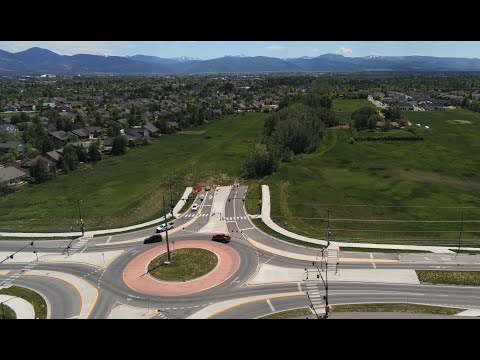
Click here to play video Fowler Flyover! Fowler Avenue Connection Area Drone video of the Fowler Avenue area from Huffine Lane to the Oak Street roundabout.
-

Click here to play video
Transportation Advisory Board discussion on Fowler design alternatives
On April 27th the Transportation Advisory board discussed the design alternatives posed to all of our focus group participants. You can check out what we heard from the board on lane configuration, intersection connections, multimodal infrastructure, and streetscaping in the video below! Discussion begins around 54:11.
-
Click here to play video Video simulation of intersection options See how each intersection option for Fowler would operate in this traffic simulation video.
Follow Project
Level of Engagement
Inform: Giving information to the community
Consult: Asking for the community's input on alternatives